
Your EHR shows 80 new patient visits this month. Your waiting room feels busy. Yet, your bank account balance remains flat.
This is the silent leak.
You do not have a marketing problem. You have a patient attrition problem. But it does not look like angry patients quitting your care.
It looks like a rescheduled Thursday appointment that never gets put back on the book. It looks like a patient who finishes their initial pain phase, walks past your front desk, and simply drifts away. They do not say goodbye. They just stop showing up.
We call this patient drift. It is costing your practice tens of thousands of dollars in unrealized clinical value every single quarter.
This article exposes exactly where your revenue is draining. We will calculate the true math of this drift. Then, we will isolate the three specific front-desk habits driving it. You will get a concrete system to plug the leak without buying more ads.
Key Takeaways
- Silent Revenue Drain: Patient drift costs standard 1-3 location chiropractic practices approximately $72,000 annually, calculated from losing just four patients monthly at $1,500 lifetime value each, without factoring in the $200 average acquisition cost per patient.
- Attrition Rate Reality: Medical and specialty practices including chiropractic clinics experience 17-25% annual patient attrition rates, meaning a practice with 400 active patients loses 68-100 patients yearly to inertia rather than competitor clinics.
- Acquisition Cost Trap: Acquiring new healthcare patients costs 5-25 times more than retaining existing ones, yet most practices allocate 90% of marketing budgets to acquisition while spending nearly zero on systematic retention protocols.
- Three-Stage Drift Pattern: Patients predictably drift through delayed appointments (extending one-week cycles to three weeks), out-of-orbit phase (intending to reschedule but never acting), and forgotten relationship stage (feeling too awkward to return after prolonged absence).
- Compliance Liability Risk: Generic AI tools confidently generate non-compliant health claims violating state regulations like Washington's WAC 246-808-600 and Minnesota Rules Part 2500.0400, which explicitly prohibit advertising guarantees of cures, with legal liability falling entirely on the licensed clinician.
What is the Clinical Mirage in Chiropractic Practices?
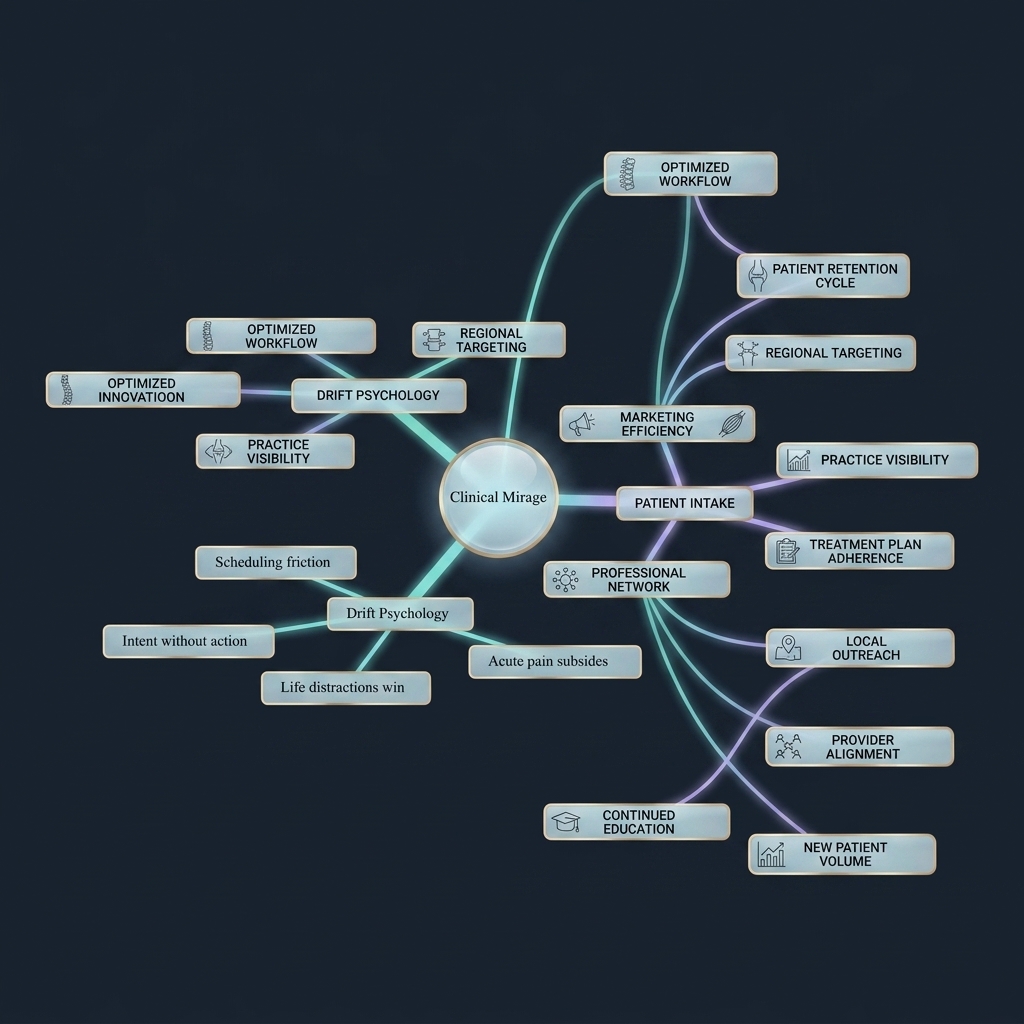
The clinical mirage in chiropractic practices refers to the deceptive appearance of productivity when the schedule shows multiple adjustments and patients in the waiting room, while masking the underlying problem of patient drift. This occurs when satisfied patients who intend to return simply fade away without canceling, creating silent gaps that go unnoticed amid daily operations.
The Clinical Mirage
Picture Tuesday at 2:00 PM. Your schedule shows six adjustments between now and close. Two patients are in the waiting room. Your CA is confirming tomorrow's appointments. The practice feels productive.
But look closer at the 3:30 slot. That gap should not be there.
Three weeks ago, Sarah, the dental hygienist with chronic cervical tension, stood at your front desk after her fourth visit. She told your CA she felt 80% better. She said she would call next week to get back on the schedule. She never called.
Sarah did not cancel. She did not complain. She simply evaporated from your active roster.
This is not a cancellation. Cancellations trigger front-desk action: a call, a text, an attempt to reschedule. Patient drift is the silent departure—the patient who walks out intending to return and then quietly fades into the background static of daily life.
The Psychology of the Drifting Patient
Sarah loves your care. If you called her right now and asked how her experience was, she would give you five stars. She would recommend you to a friend.
But she is not coming back this month. Maybe not next month either.
Why? Because her son started soccer. Because her work project went critical. Because the acute pain that drove her initial urgency is now a dull background hum she can ignore. The path back to your table requires her to remember, to prioritize, to pick up the phone during business hours and navigate your scheduling system.
That is three friction points. Life has ten thousand distractions. The drift wins by default.
Why Do Patients Slowly Stop Coming to Their Appointments?
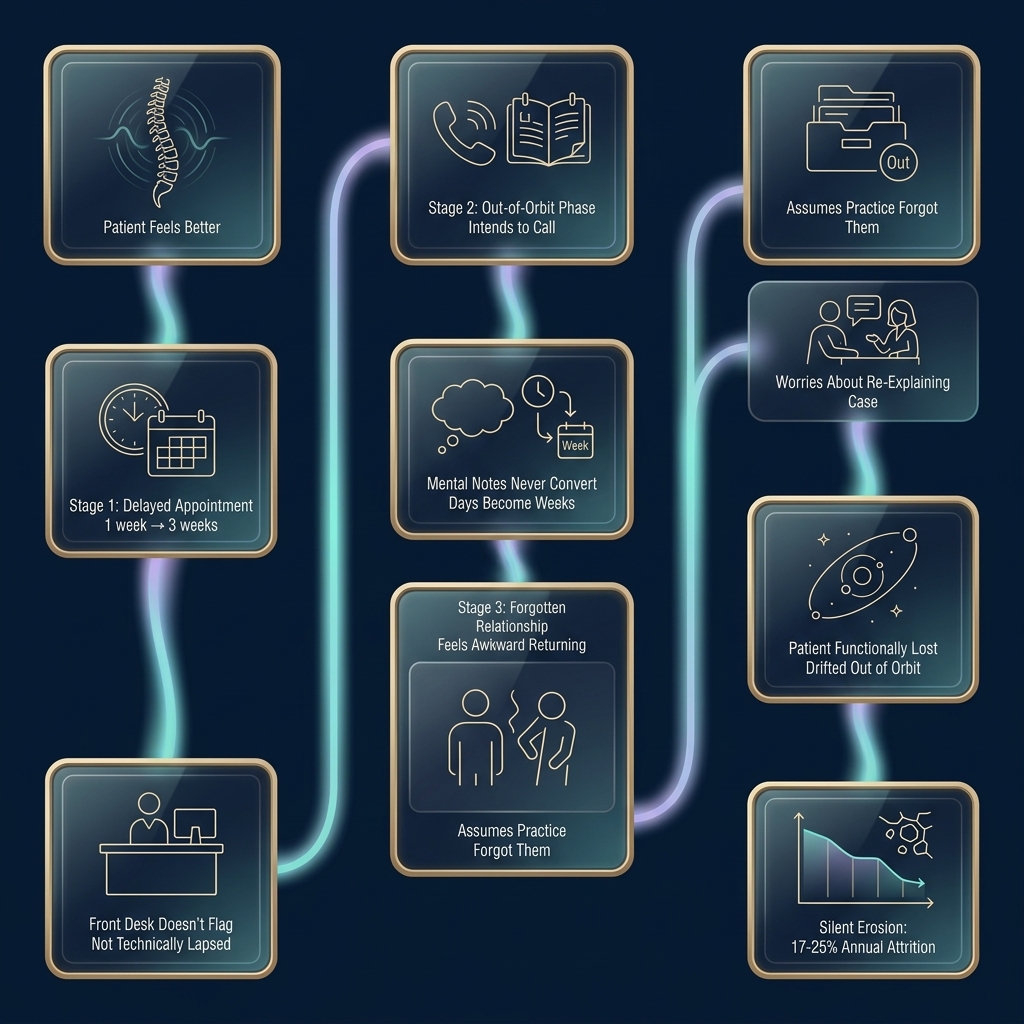
Patients drift away through three predictable stages: first delaying appointments while feeling better, then entering a phase where they intend to reschedule but never act on it, and finally reaching a point where enough time has passed that returning feels awkward. This gradual disengagement happens through inertia rather than conscious decisions to switch providers.
The Anatomy of Patient Drift
The Progression: Three Predictable Stages
Stage 1: The Delayed Appointment. The patient extends their care cycle from one week to three weeks. They feel better. They rationalize the delay. Your front desk does not flag it because the patient has not technically lapsed yet.
Stage 2: The Out-of-Orbit Phase. The patient genuinely intends to call. They think about it in the car. They make a mental note during lunch. But they never convert that intention into action. Days become weeks. The gap widens.
Stage 3: The Forgotten Relationship. Enough time has passed that the patient now feels awkward returning. They assume you have forgotten them. They worry they will need to re-explain their case. The psychological barrier to re-entry is now higher than the barrier to staying away.
At this point, Sarah is functionally lost. She has not fired you. She has not switched providers. She has simply drifted out of orbit.
Why Traditional Metrics Lie
Your daily patient volume looks stable. Your new patient acquisition numbers might even be climbing. But these top-line figures mask the silent erosion happening in your mid-lifecycle patient base.
New patients flood in the front door. Drifting patients leak out the back. You are running harder to stay in the same place.
The average annual patient attrition rate for medical and specialty practices typically hovers around 17%, though some practice management software companies and specialty clinics report rates reaching up to 25%. That means if you have 400 active patients in your system, you are quietly losing between 68 and 100 of them every year, not to competitor clinics, but to inertia.
How Much Revenue Does Patient Drift Cost My Practice?
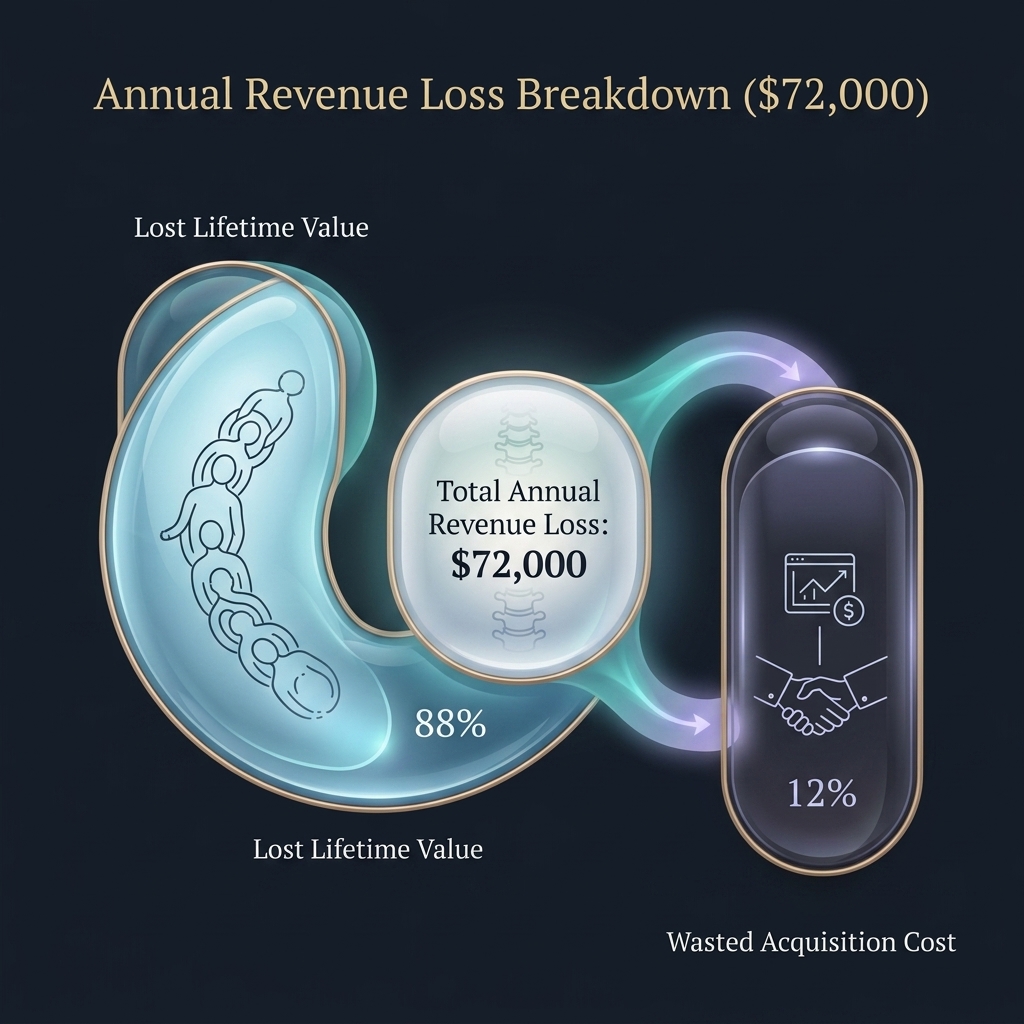
Patient drift typically costs a standard 1-3 location chiropractic practice approximately $72,000 annually. This calculation assumes losing just four patients monthly at a conservative $1,500 lifetime value per patient. When factoring in the $200 average acquisition cost per patient, practices lose an additional $1,100 in unrealized value for each patient who drifts prematurely.
The Brutal Math of the Invisible Leak
The Revenue Equation
Let's calculate what drift actually costs a standard 1-3 location chiropractic practice.
Industry software providers and marketing agencies estimate the average lifetime value of a chiropractic patient falls between $1,000 and $3,000. We will use a conservative middle figure: $1,500.
If patient drift causes you to lose just four patients per month, patients who simply stop scheduling and fade away, you are losing $6,000 in monthly revenue.
Multiply that across twelve months: $72,000 in annual lost revenue.
That is not a marketing problem. That is a systems problem.
The Customer Acquisition Cost Trap
Now layer in acquisition costs. Standard customer acquisition cost (CAC) for a chiropractic clinic using Google or Meta ads typically runs between $150 and $600 per new patient, depending on local competition, the services offered, and agency management fees. Let's use $200 as a realistic middle figure.
You spent $200 to acquire Sarah. You delivered excellent clinical care. She loved the experience. Then she drifted away after visit four, generating roughly $400 in lifetime revenue instead of the projected $1,500.
You lost $1,100 in unrealized value. And you are about to spend another $200 to replace her with a new patient who might drift at the exact same stage.
Acquiring a new healthcare patient is 5 to 25 times more expensive than retaining an existing one; this is a foundational metric from Harvard Business Review and Bain & Company that applies universally across healthcare. Yet most practices allocate 90% of their marketing budget to acquisition and nearly zero to systematic retention.
The math does not work.
Why the P&L Statement Hides the Damage
Short-term revenue spikes from new patient promotions create the illusion of growth. You ran a Facebook campaign. You got 30 new patients. Revenue jumped.
But three months later, 40% of those patients have drifted. Your net patient base grew by 18, not 30. The promotion masked the decay.
This is why your waiting room feels busy but your bank account stays flat. You are replacing lost patients, not adding to your base.
Why Do Standard Patient Reactivation Emails Usually Fail?
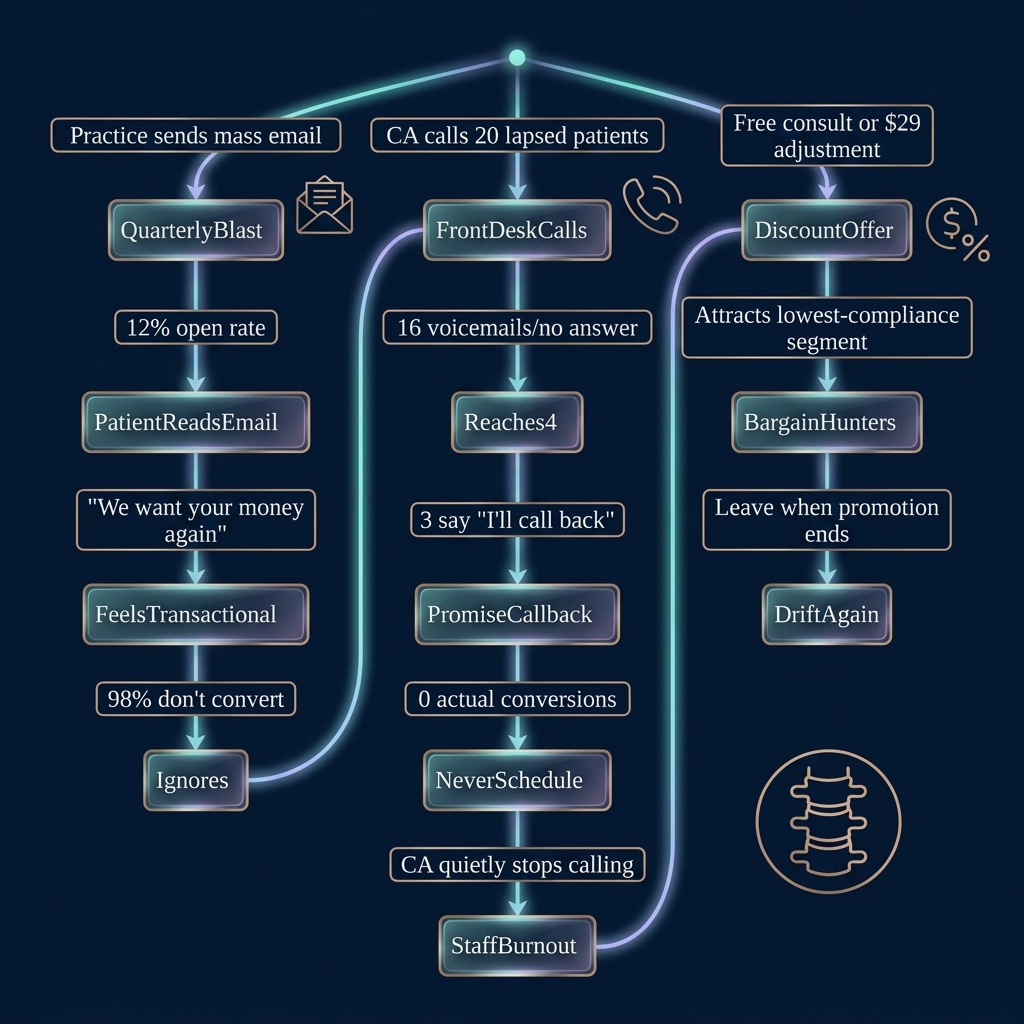
Standard patient reactivation emails fail because they feel transactional and desperate, highlighting the care gap rather than offering genuine value. Patients perceive these messages as purely financial requests rather than clinical concern. Combined with generic subject lines and mass-blast approaches, these emails achieve poor engagement, typically converting less than 1% of recipients into scheduled appointments.
Why the Obvious Fixes Fail
The Desperate Reactivation Blast
Every quarter, you send a mass email to your inactive patient list. Subject line: "We Miss You!" or "Come Back for a Free Consultation!"
Open rate: 12%. Click rate: 2%. Conversion rate: less than 1%.
Why does this fail? Because the message feels transactional and desperate. It highlights the gap in care rather than offering value. The patient reads it as: "We noticed you stopped paying us, and we want your money again."
That is not a retention strategy. That is a Hail Mary.
The Front-Desk Cold Call Grind
You task your CA with calling lapsed patients. She makes 20 calls. She reaches four people. Three say they will call back to schedule. None do.
The psychological toll on your staff is real. These calls feel awkward. Patients dodge them. Your CA burns two hours for zero conversions, then quietly stops making the calls because the ROI on her time is invisible.
Manual outreach does not scale. It relies on heroic individual effort, and heroic effort always degrades under operational pressure.
The Discounting Trap
You offer a "free consultation" or a "$29 adjustment" to win back lapsed patients. A few take the bait. But the patients who respond to deep discounts are the same patients who will drift again the moment the promotion ends.
You have now trained your patient base to wait for discounts. You have devalued your clinical expertise. And you have attracted the lowest-compliance segment of your market.
Discounting does not solve drift. It accelerates it.
How Do You Keep Patients From Leaving Your Practice?
Chiropractors retain patients by maintaining continuous, low-friction contact rather than attempting reactivation campaigns. The strategy focuses on becoming an indispensable wellness resource through educational content, consistent communication, and top-of-mind presence. By providing high-value information about posture, pain relief, and preventive care, practices keep patients engaged even between active treatment periods, preventing attrition before it occurs.
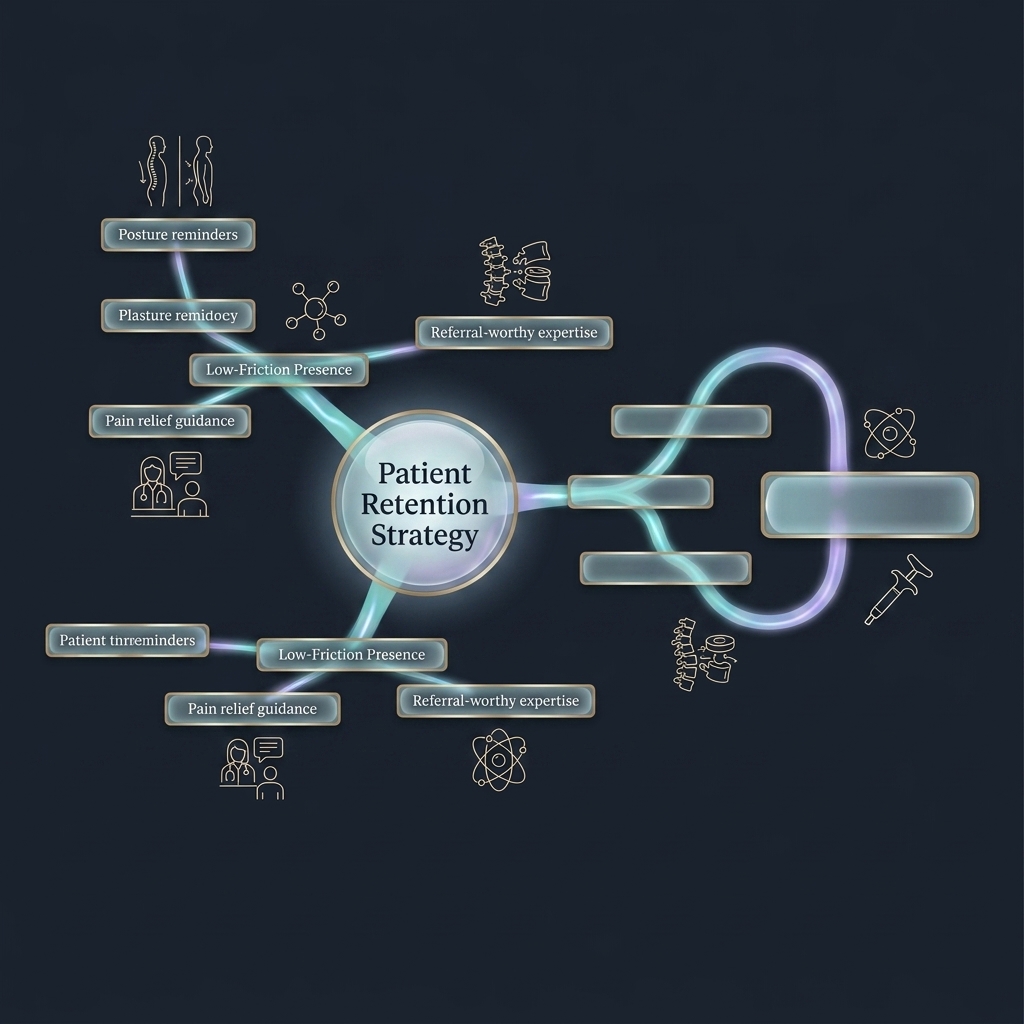
The Paradigm Shift: From Rescue Missions to Gravitational Pull
Here is the belief shift that changes everything: keeping a patient within your practice's gravitational pull is infinitely easier than launching a rescue mission once they have drifted into deep space.
The goal is not to "reactivate" lapsed patients. The goal is to prevent the lapse in the first place.
This requires a fundamental change in how you think about patient communication. You are not selling visits. You are maintaining an intellectual and emotional connection with your community.
The Power of Low-Friction Presence
Patient retention in chiropractic is not about sales pitches. It is about becoming an indispensable, top-of-mind wellness resource in their daily lives.
When Sarah thinks about her posture at her desk, she should think of you. When her coworker complains about migraines, she should mention your name. When she Googles "best stretches for neck pain," your article should appear on page one.
This is not marketing. This is constant contact: a low-friction, high-value presence that keeps you in orbit even when the patient is not actively seeking care.
What is the Unified Constant-Contact System?
The Unified Constant-Contact System is a three-component patient retention framework for healthcare practices that combines steady educational content publishing, value-driven patient newsletters, and a third component working together to create compounding retention effects. It focuses on authoritative, clinically sound content rather than promotional messaging to maintain ongoing patient engagement and position practitioners as local health experts.
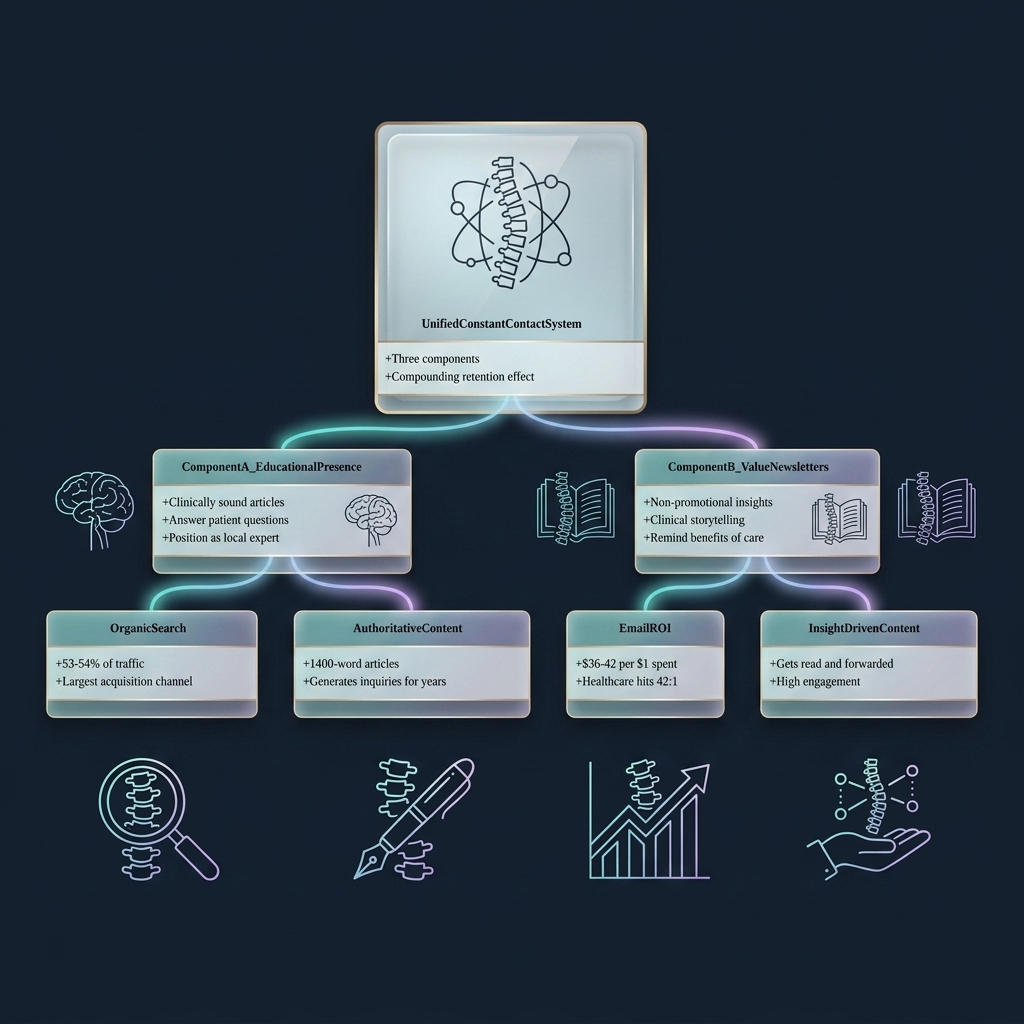
The Unified Constant-Contact System
The system has three components. Each one operates independently, but together they create a compounding retention effect.
Component a: Steady Educational Presence
Publish high-quality, clinically sound articles on your website that answer the exact health questions your patients are searching for. Not generic blog posts. Not AI-generated filler. Authoritative content that positions you as the local expert on musculoskeletal health.
Studies from leading SEO platforms like BrightEdge track organic search as driving approximately 53% to 54% of all trackable website traffic across the healthcare industry, making it the single largest acquisition channel for medical practices. When your content ranks, you capture patients at the exact moment they are seeking answers. Major marketing reports from HubSpot show that practices with active blogs receive 4.8 times more patient inquiries than those without, and studies on professional development and patient education programs consistently show a 34% increase in retention rates when ongoing education and communication are prioritized.
This is not about volume. This is about authority. One well-researched, 1,400-word article on "How to Fix Forward Head Posture Without Surgery" will generate patient inquiries for years.
Component B: Value-Driven Patient Newsletters
Deliver non-promotional, highly engaging health insights directly to the patient's inbox. Not "Book Now" campaigns. Not discount offers. Clinical storytelling that reminds patients of the long-term benefits of regular care without asking for an appointment.
Leading email marketing platforms like Litmus and the Data & Marketing Association (DMA) consistently report the average ROI for email marketing across industries as $36 to $42 for every $1 spent. The healthcare and wellness sector frequently hits the 42:1 mark due to the high lifetime value of patients and the low cost of sending emails. But only if the content is valuable. Generic newsletters get deleted. Insight-driven newsletters get read and forwarded.
Component C: Timely, Low-Friction Recall Touches
Micro-communications designed to lower the barrier to re-entry for patients who have paused care. A two-line text message. A personalized email. A quick check-in that meets the patient where they are.
The key is personalization and clinical relevance. "Hi Sarah, Dr. Jensen was reviewing your file and wanted to check in on how your neck has been holding up" performs infinitely better than "We miss you! Book now!"
How Does Consistent Communication Build Trust With Patients?
Consistent communication builds trust through a compounding flywheel effect where each valuable interaction reinforces expertise and authority. The first article establishes credibility, subsequent communications deepen it, and repeated exposure positions the practice as the default choice. This sustained presence ensures the provider remains top-of-mind when patients need care, transforming options into obvious decisions.
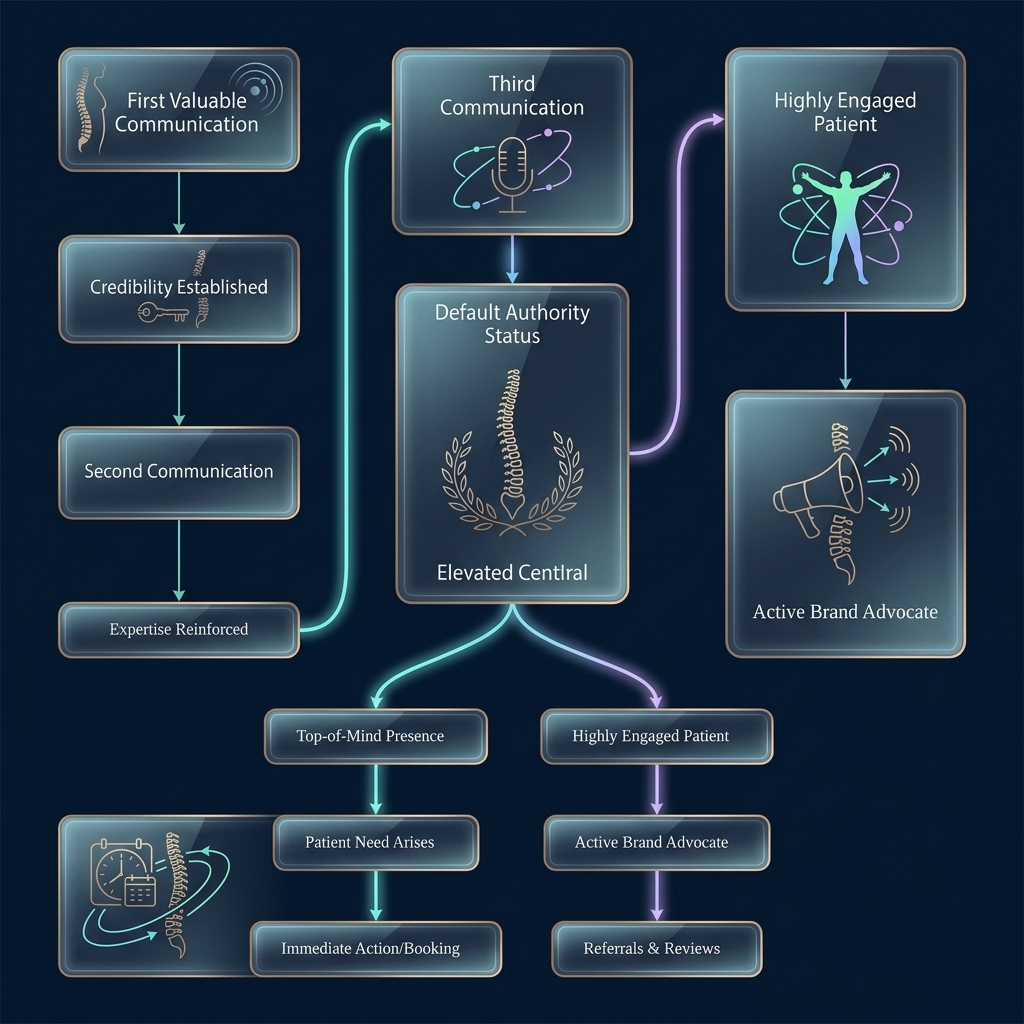
The Flywheel Mechanism: Why Constancy Compounds
The Trust Flywheel
Consistent, high-value communication builds a compounding layer of trust over time. The first article Sarah reads establishes your expertise. The second reinforces it. The third makes you the default authority in her mind.
By the time she needs care again, you are not just an option. You are the obvious choice.
The Right Time, Right Place Phenomenon
A patient who receives a helpful article on ergonomics on a Tuesday morning is ten times more likely to book an appointment when their back tightens up on Wednesday. Not because the article sold them. Because it kept you top-of-mind at the exact moment need converted into action.
This is the mechanism behind retention. You are not chasing patients. You are present when they are ready.
How Retention Feeds Referral
Highly engaged, non-drifting patients naturally become active brand advocates. They refer friends. They leave reviews. They share your content.
This drives down acquisition costs through organic word-of-mouth. The patient you retain becomes the patient who brings you three more, without a dollar spent on ads.
Why is Implementing a New Business System so Hard?
Implementing new business systems fails because execution requires sustained, specialized labor that becomes unsustainable. Even simple protocols like weekly patient recalls demand two hours of focused, uninterrupted work that cannot be skipped, delegated carelessly, or automated generically. When staff shortages, busy periods, or vacations occur, the system immediately breaks down despite being strategically sound.
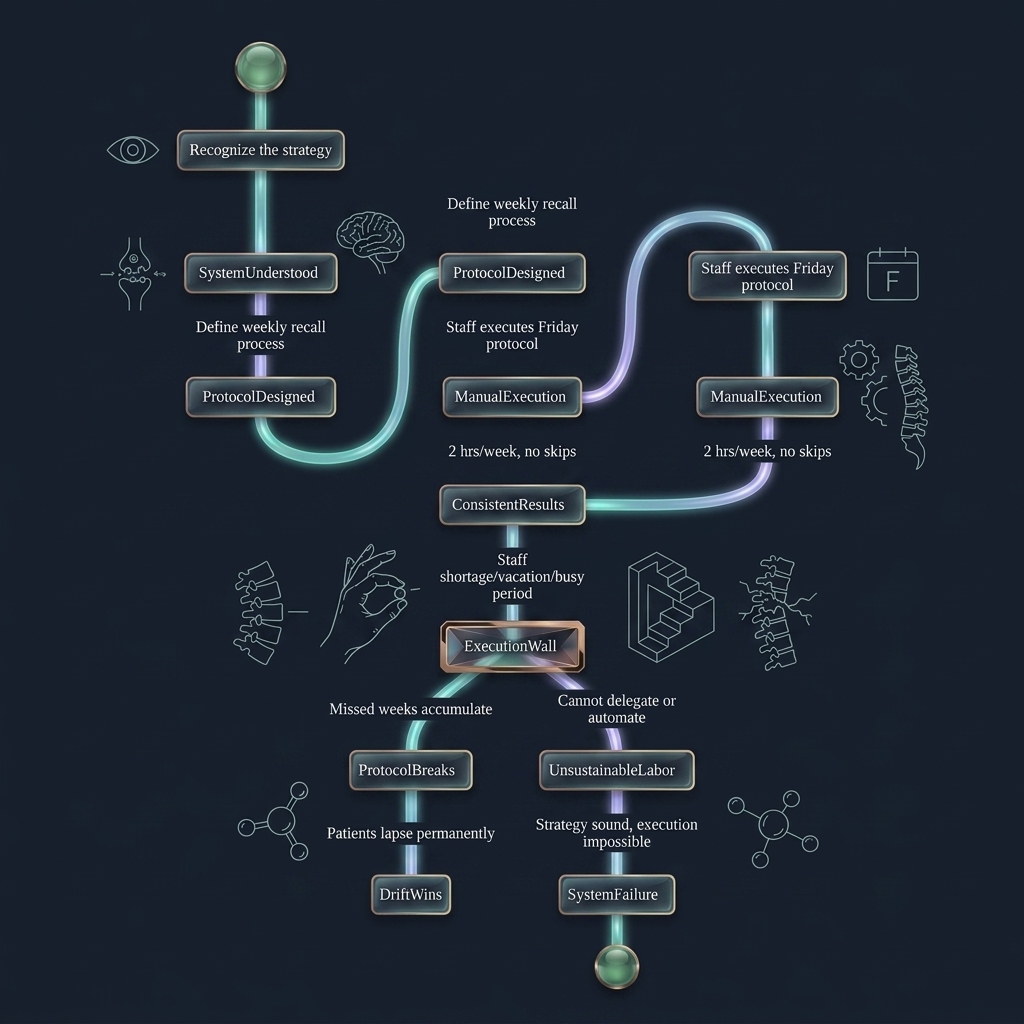
The Execution Wall
You now understand the system. You believe the system is correct. You want to implement the system.
Here is the new problem: executing this system manually is a part-time job you did not go to school for.
The Friday No-Appointment Protocol
Let's start with the simplest, most tactical piece: the weekly patient recall process.
Step 1: Every Friday at 2:00 PM, run a report in your Patient Management Software for all patients who have visited in the last 90 days but have no future appointments scheduled.
Step 2: Filter out any acute or discharged cases to isolate the drifters.
Step 3: Send a highly personalized, two-line text message to each patient. The script: "Hi [Name], Dr. [Last Name] was reviewing your file and wanted to check in on how your [specific symptom/area] has been holding up. We have openings this Tuesday at 10:00 AM or Thursday at 3:00 PM if you need a quick tune-up. Let me know if either works!"
This protocol works. When executed consistently, it recovers 15-25% of drifting patients before they fully lapse.
The Honest Math of the Protocol
This protocol requires a minimum of two hours of uninterrupted, focused staff or owner time every single Friday. You cannot skip a week. You cannot delegate it to someone who does not understand clinical context. You cannot automate it with a generic template.
The moment the clinic gets busy, staff calls out sick, or the doctor goes on vacation, the protocol breaks down. If you skip even two weeks, the drift wins.
That is the execution wall. The system is correct. The discipline required to operate it manually is unsustainable.
The Reality of Scaling the Full System
Now add in the content creation mountain. Data from Orbit Media's Annual Blogger Survey shows that the average time it takes a marketer or writer to draft a high-quality blog post has settled at exactly 3 hours and 25 minutes. To rank on Google, that post needs to be approximately 1,400 to 1,500 words, clinically accurate, and optimized for search.
The true hourly breakdown for a full constant-contact system:
- Writing and SEO research: 4-6 hours per week
- Newsletter design and list segmentation: 2-3 hours per week
- Social media adaptation and posting: 2 hours per week
- Managing patient replies and SMS scheduling: 3-5 hours per week
That is 11 to 16 hours per week. That is a part-time employee. Except you are not hiring a part-time employee. You are asking your CA, who is already managing the front desk, answering phones, and processing insurance, to also become a professional copywriter, SEO specialist, and digital marketer.
The skills gap is real. The time burden is crushing. The system fails not because it is wrong, but because it is operationally impossible to sustain.
The Dangerous Shortcut: Why Generic AI is a Liability
You have heard the pitch: "Just use ChatGPT to write your content." It sounds efficient. It is not.
Generic AI tools produce non-deterministic output. The quality varies wildly. The voice is robotic. The content lacks the clinical nuance and local authority that makes patients trust you.
Worse, prompting, editing, fact-checking, and formatting AI-generated text often takes just as long as writing from scratch. You have not saved time. You have just added a layer of review overhead.
The Regulatory and Compliance Nightmare
Here is the liability that no one talks about: generic AI models confidently write non-compliant health claims. They will tell patients that chiropractic "cures" sciatica. They will guarantee results. They will make improbable claims that violate state chiropractic board advertising rules.
For example, Washington State's WAC 246-808-600 explicitly prohibits "Advertising which guarantees any result or cure." Minnesota Rules Part 2500.0400 specifically states: "The terms 'cure' or 'guarantee to cure' or similar terms in advertisements are fraudulent and misleading to the general public." Florida Statutes (Chapter 458/459) hold similar prohibitions against deceptive, untrue, or fraudulent representations regarding curing ailments.
The legal liability for AI-generated content falls entirely on the licensed clinician. U.S. courts hold healthcare providers responsible for the standard of care and accuracy of records, regardless of AI assistance.
You own every word the AI writes. If it violates advertising regulations, you are the one facing the board complaint.
How Do I Automate Patient Communication Without Extra Work?
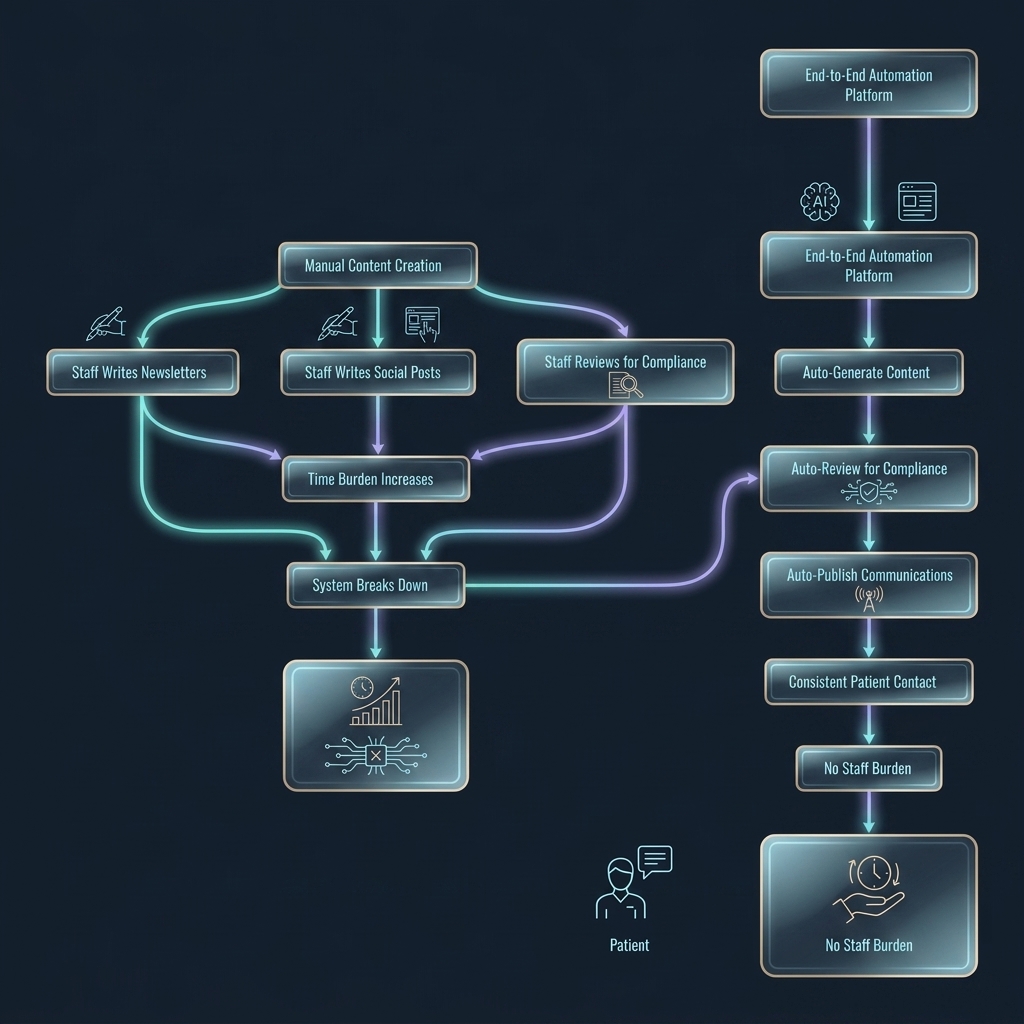
Use end-to-end automation platforms designed specifically for healthcare practices that generate custom patient communications, newsletters, and content in your practice's voice, then review for clinical and regulatory compliance before automatically publishing. This eliminates manual writing and reviewing work while maintaining consistent patient contact without adding staff burden or compliance risk.
A System, Not a Job
You are standing at a crossroads. You now understand that a constant-contact system is the absolute correct solution to solve patient drift. But executing it manually is a second full-time job you did not go to school for.
Generic AI tools do not solve this. They shift the burden from writing to reviewing, and they introduce compliance risk you cannot afford.
The alternative is platforms that operate this whole loop end-to-end—generating custom, practice-voiced SEO articles, newsletters, and patient communications, reviewed for clinical and regulatory accuracy, and published automatically without lifting a finger. Tools like Omniply exist specifically to run the playbook elite practice coaches teach their clients to execute by hand, operating the system that works every time it is actually executed and fails every time life gets in the way of executing it.
The final verdict is yours. You can spend your weekends writing marketing copy, or you can let a system run the playbook for you while you focus on the clinical care that keeps patients coming back.
The revenue is not lost because patients stopped caring. It was lost because you stopped being there when they did.
Frequently Asked Questions
What is a Normal Patient Dropout Rate for Chiropractors?
The average annual patient attrition rate for medical and specialty practices, including chiropractic clinics, typically hovers around 17%, though some practice management software companies and specialty clinics report rates reaching up to 25%. This means a practice with 400 active patients can expect to lose 68 to 100 patients per year to drift, not to competitor clinics but to inertia and lack of systematic follow-up.
Is Texting Inactive Patients HIPAA Compliant?
Yes, if executed correctly. Standard SMS messages are not encrypted end-to-end and reside on telecom servers, making them non-compliant for transmitting Protected Health Information (PHI). Text messages to patients must be sent through a HIPAA-compliant platform that encrypts data and logs all communications. Healthcare providers must use secure, encrypted platforms and have a signed Business Associate Agreement (BAA) with the software vendor to remain compliant. You cannot use personal cell phones or standard SMS without a BAA in place. The content of the message must also avoid including protected health information beyond what is necessary for appointment scheduling.
Can ChatGPT Write Patient Reactivation Emails?
ChatGPT can generate draft text, but the output is non-deterministic, often generic, and carries significant compliance risk. Generic AI models do not understand state-specific chiropractic advertising regulations and will confidently write claims that violate board rules. The legal liability for any AI-generated content falls entirely on the licensed clinician, making unreviewed AI content a professional risk.
How to Automate Front Desk Patient Follow Ups?
Automation requires three components: a patient management system that flags patients with no future appointments, a HIPAA-compliant communication platform for SMS and email, and a content engine that personalizes messages based on clinical context. The most effective systems combine automated triggers with human review to ensure clinical relevance and regulatory compliance.
Is Patient Reactivation Software Worth the Money?
The math is straightforward. If patient drift is costing your practice $72,000 per year in lost lifetime value, and a systematic reactivation platform recovers even 20% of those patients, the software pays for itself many times over. The return on investment comes not just from recovered revenue but from reduced customer acquisition costs and higher referral rates from engaged patients.
How to Follow up With Patient Who Stopped Coming?
The most effective follow-up is personalized, clinically relevant, and low-friction. A two-line text message that references the patient's specific condition and offers concrete appointment times outperforms generic "We miss you" campaigns by a factor of ten. The key is to lower the psychological barrier to re-entry by making the path back to care as simple as possible.
How to Calculate Chiropractic Patient Lifetime Value?
Patient lifetime value (LTV) is calculated by multiplying the average visit value by the average number of visits per patient over their entire relationship with your practice. For example, if your average adjustment is $60 and the typical patient completes 25 visits over two years, the LTV is $1,500. This figure helps you understand the true cost of patient drift and justify investment in retention systems.
How Do I Track Chiropractic Patient Drop Off?
Run a monthly report in your practice management software for all patients who visited in the last 90 days but have no future appointments scheduled. Filter out acute cases and discharged patients to isolate the drifters. Track this number month-over-month to measure the effectiveness of your retention efforts. A rising drift rate signals a systemic problem in your follow-up process.